
What Families Should Know About the Upcoming US Youth Soccer Age Group Changes
As many families are aware, US Youth Soccer is preparing for possible changes to how age groups are structured moving forward. While final implementation details continue to develop, Next 11 Academy has already been preparing for these adjustments across all age levels.
Over the past several months, our staff has modeled multiple roster and team scenarios to help ensure a smooth transition for players and families if the changes are implemented.
Our primary goals are:
• Keep as many existing teams intact as possible
• Support long-term player development
• Create competitive and age-appropriate training environments
• Maintain strong team culture and continuity
• Provide flexibility when individual situations require it
For our upcoming tryouts, players will initially register and try out with their projected new age group based on the anticipated changes. However, player movement may occur on a case-by-case basis depending on developmental needs, roster balance, physical maturity, competitive level, and long-term fit within the club structure.
We also recognize that these changes may create movement across clubs throughout the soccer community. As part of our evaluation process, we will continue to consider both returning players and prospective players seeking the right developmental environment. There will be not guaranteed roster spots for returning players.
Families with questions about where their player may fall within the updated structure are encouraged to contact their current coach or prior to tryouts.
-
The updated age-group structure was approved to better support player development and improve the overall youth soccer experience.
The goals behind the change include:
• Better alignment with school-grade peers
• Improved social and developmental fit for players
• Reduction of “trapped players” situations
• Greater flexibility for player placement and development pathways
• Stronger long-term team continuity and player retention
• Better alignment with the traditional soccer seasonal calendarMany families and clubs across Indiana and the broader youth soccer landscape have advocated for a structure that keeps more classmates and peers together throughout their development years.
-
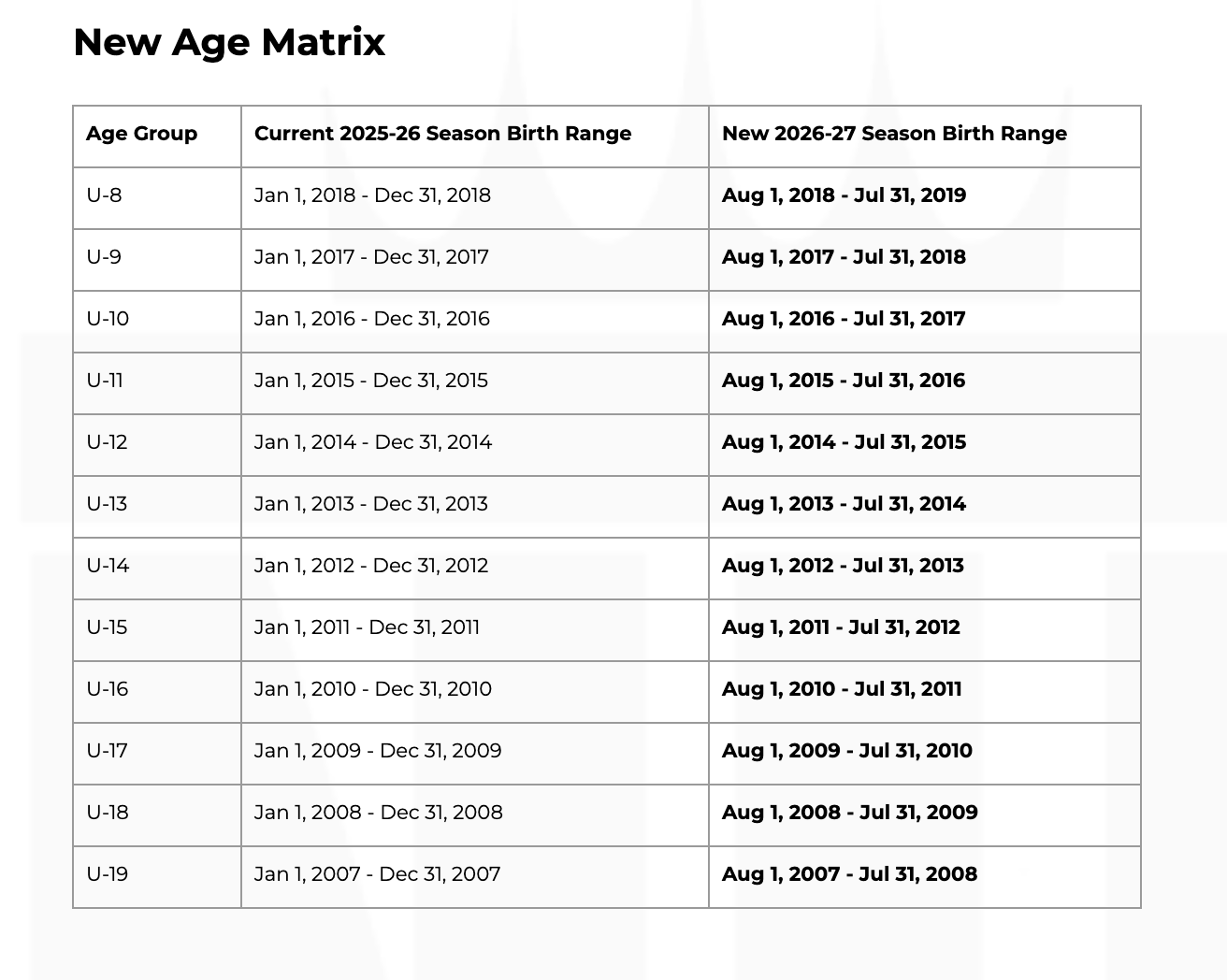
Beginning with the 2026-2027 season, U.S. Youth Soccer and US Club Soccer are expected to transition from the current calendar-year age grouping system to a new seasonal-year age grouping structure.
The current system groups players based on birth years from January 1 through December 31. Under the new structure, players will instead be grouped using an August 1 through July 31 cycle, which more closely aligns with the traditional school year.
This change will impact team formation, registration, and tryout age groups beginning with the 2026-2027 season.
-
The seasonal-year age grouping will begin with the 2026-2027 soccer season, including:
• 2026-2027 competitive tryouts
• Team formation for the 2026-2027 season
• Registration and placement for Fall 2026 programmingThe Spring 2026 season will remain under the current calendar-year structure.
-
Players born between August 1 and December 31 will likely see the biggest change under the new structure.
In many cases, these players may remain in their current age group for an additional seasonal year rather than automatically moving up under the previous calendar-year system.
This adjustment is part of the effort to better align players with classmates, social groups, and developmental peers.
-
Players should initially register and try out within their projected new age group based on the updated August 1 through July 31 guidelines.
During evaluations, Next 11 Academy directors and coaching staff may determine that certain players would benefit from movement based on factors such as:
• Technical development
• Physical maturity
• Competitive readiness
• Long-term development pathway
• Roster balance and team fitAny placement decisions regarding movement between age groups will be communicated directly by club leadership and coaching staff.
-
In select situations, yes.
Next 11 Academy may recommend advanced placement for players when it is determined to be in the best developmental interest of the player.
These decisions are evaluated carefully and individually with a long-term development approach in mind rather than short-term competitive outcomes.
-
One of the club’s primary objectives during this transition is to preserve as much continuity as possible.
We recognize the importance of:
• Team chemistry
• Friendships and social connection
• Coaching continuity
• Long-term development within established environmentsWhile some adjustments may be necessary due to roster composition and age-group alignment, our staff is working carefully to minimize unnecessary disruption wherever possible.
